Conventional Fire Alarm Systems are one of the most widely used and economical safety solutions for small to medium-sized facilities. At Harsha Engineers, we provide robust conventional systems that ensure dependable fire detection and alerting across various environments.
In a conventional system, detectors, call points, and sounders are connected in designated zones. When a device within a zone is activated, the control panel identifies the affected zone, alerting occupants and guiding response teams.
Conventional fire alarm systems are among the most widely used and time-tested solutions for fire detection. They divide a building into multiple detection zones, with each zone connected to detectors and call points. When a detector is activated, the control panel identifies the zone where the alarm originated, helping responders quickly locate the affected area. These systems are reliable, simple to operate, and cost-effective, making them ideal for small to medium-sized facilities.
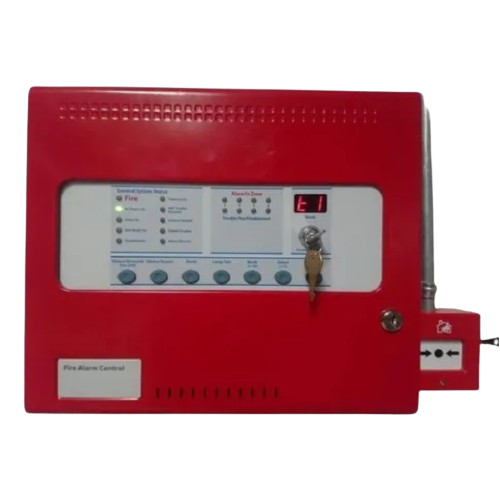
Zone-Based Detection: Each floor or area is divided into separate zones for easy identification of fire origin.
Wide Device Compatibility: Supports smoke detectors, heat detectors, manual call points, and alarm sounders.
Simple Wiring Configuration: Devices in each zone are wired in parallel, reducing complexity.
Reliable Operation: Proven technology that delivers consistent and accurate fire detection.
Audible & Visual Alarms: Provides clear alerts via sirens, bells, or strobes for fast evacuation.
Flexible Applications: Suitable for offices, retail spaces, warehouses, schools, and residential complexes.
Cost-Effective Solution: Lower installation and equipment costs compared to addressable systems.
Ease of Installation: Straightforward wiring and setup make it quick to deploy.
User-Friendly Operation: Simple control panel design ensures easy monitoring and maintenance.
Reliable Fire Safety: Trusted technology with a strong track record in various applications.
Customizable Zoning: Allows segmentation of buildings for quicker identification of fire-affected areas.
Low Maintenance Requirements: Minimal servicing needs help reduce long-term operational costs.
Ideal for Small to Medium Premises: Perfect choice where complex features of addressable systems are not required.
System Design: Typically supports 2 to 32 zones, depending on the panel model.
Detectors: Compatible with ionization, photoelectric smoke detectors, and fixed/rate-of-rise heat detectors.
Sounders & Beacons: Integrated alarm devices ensure compliance with safety standards.
Wiring Standard: Uses radial wiring with end-of-line monitoring.
Power Supply: 230V AC mains with battery backup for uninterrupted operation.
Compliance: Meets IS/UL/EN standards for fire safety and alarm systems.
Copyright Reserved © Harsha Engineers
Powered by Rashmita Infinity – Hyderabad (Digital Marketing agency in Hyderabad)